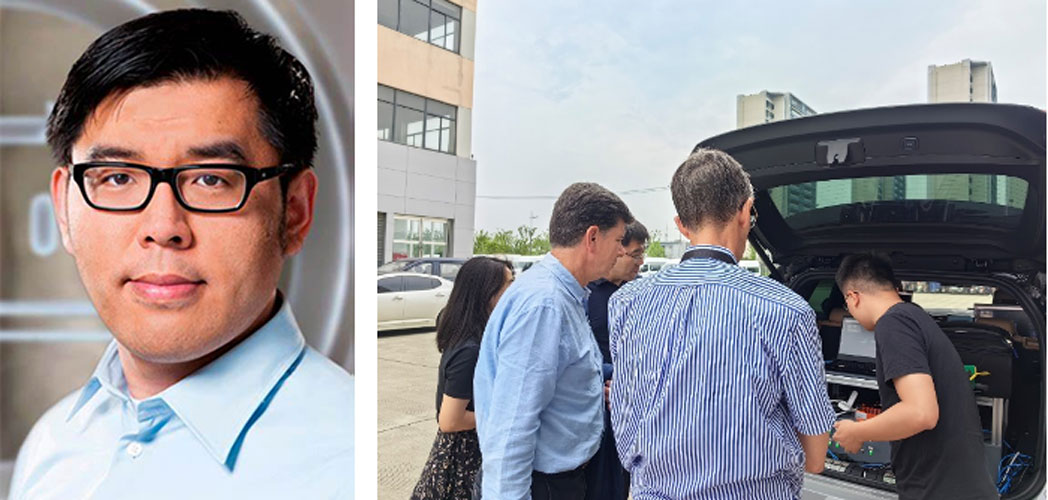
DVN had the pleasure to visit Seyond’s facility in Sozhou, including labs and manufacturing lines. We met with Product & Strategy VP Dr. Leilei Shinohara; Marketing & New Business Incubation Head/China Linda Xu, and PR Lead Echo Chen. The DVN team included Lidar General Editor Eric Amiot and ADAS-AD Systems Expert Luc Bourgeois. The main purpose of the visit was to better understand the reasons why the lidar is expanding much faster in China than in Europe.
DVN: How fast is the Lidar market growing in China?
Seyond: In 2023, Automotive lidar sales reached a total volume of 550,000. In Q1 2024, Lidar sales reached 225,000, which means the market is growing up quickly.
DVN: What is your expectation for the robotaxi market?
Seyond: We do not see a significant business for robotaxis in the near future. There is no business case today in China due to the low fares of DIDI. In addition, you need to go to robotaxi stations to benefit from the service which is less flexible than a standard taxi driver / DIDI picking you up anywhere.
DVN: What is the maturity of Lidar in China ?
Seyond: Last year some OEMs investigated a few alternatives to remove the lidar sensor for SOPs in 2024 due to the cost, but this year most of them are convinced again they need the lidar.
The market is converging with ADAS systems using one front lidar only.The main technology is 905 nm today but 1550 nm is a niche for high performance lidars like the lidars from Seyond.
NOA systems are working well on highways. They do not need very frequent interventions, performing well >80 per cent of the time based on my home-office travel, Shanghai-Suzhou.
Integration on the roof is popular in China. Regarding Nio models, the lidar integration is simple, with passive cooling and no cleaning system. Some automakers have started using lidar to improve the AEB function: the max AEB speed is significantly improved with lidar.
An important benefit is a faster development/validation of ADAS/NOA applications: with lidar you do not need a full worldwide data base like a pure vision system which requires millions of km to be robust enough. We have seen some lidar projects going to production in less than 12 months, based on a pre-validation of our sensor on dedicated routes before project kick-off.
And you do not need HD maps to support SLAM applications The map is created and memorized by the sensors on the vehicle for the frequent travel routes using lidar (e.g., home-office).

DVN: are there hands off applications on the Chinese market for L2+ ?
Seyond: In China, hands-off systems are not allowed by the regulation. This means there is no pure hands-off application, and the driver is warned after a certain time if they don’t put hands on the steering wheel. Some automakers have extended this maximum duration above 1 minute on some models.
DVN: When do you see L3 applications coming in China ?
Seyond: We expect to see commercial licenses by 2025 or ’26.
DVN: Do you see BSD applications for Lidar coming ?
Seyond: Up to now the NOA application was focused on highways, now NOA applications are extended to urban and city environments. We expect at least three major automakers to launch NOA functions for urban/city environment with side lidars.
DVN: What is your competitive position on the market ?
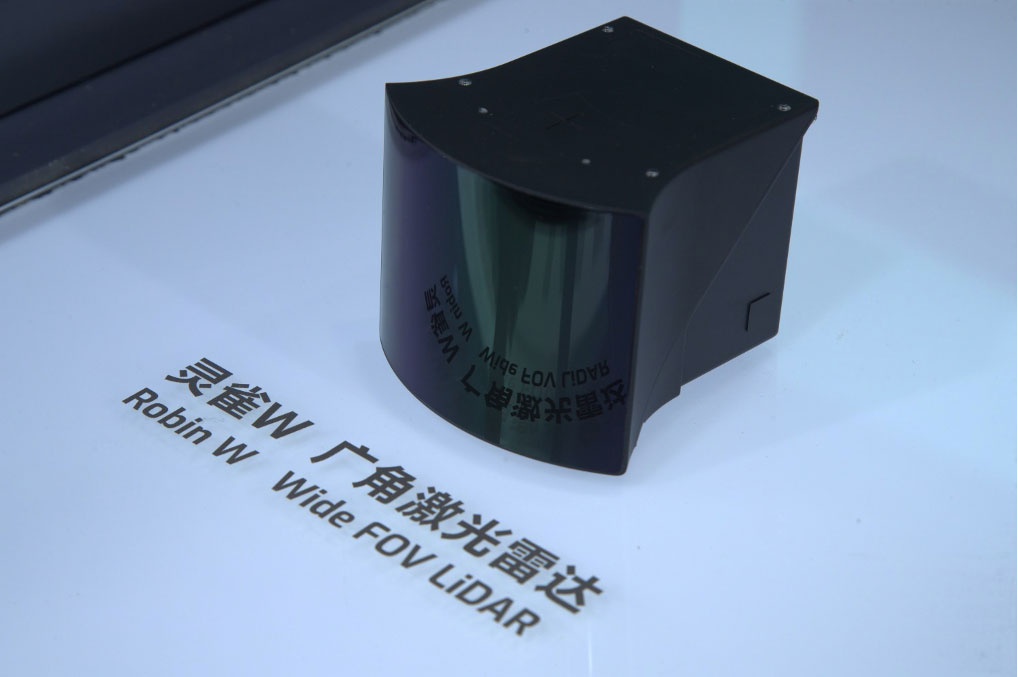
Seyond: Seyond is the only lidar supplier which has commercialized the 1550-nm and 905-nm technology lidar for SOP. 1550nm Falcon family is coming to the development of 3rd generation, already has over 300,000 mass production deliveries. 905nm Robin family’s first product, ‘Robin W1’, is in production to support Nio’s 4th-generation power swap station. The Robin W1 is going to be installed on the new Nio ET9 from beginning of next year. Together with one front ultralong-range Falcon to achieve a nearly 360 degree lidar detection coverage surround the vehicle.
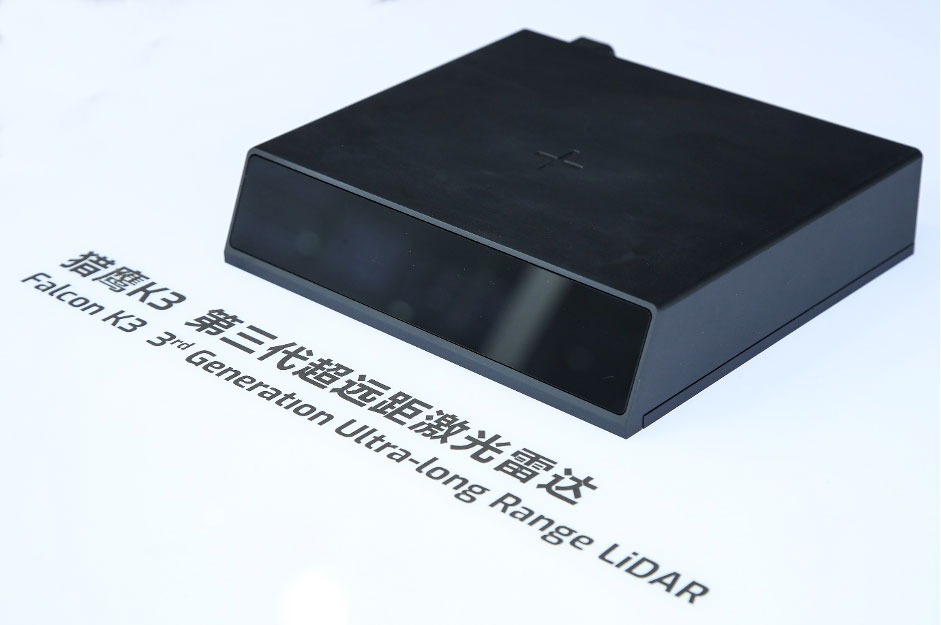
Seyond has developped high performance sensors, with 500-m range, a resolution of 0.06° × 0.06° in the region of interest. Our main customer is Nio. Our new sensor, the 3rd generation Falcon, will achieve 300-m range for a 10-per-cent reflection target and a true optical resolution in vertically up to 0.03°, which is required to detect small objects of 15 cm height at 150 m. This new sensor has the capability to support L3 systems. Lane detection can work above 100-m range.
One advantage of 1550-nm technology is that eye safety is less critical than 905 nm, which allows a high laser power to achieve a better range performance even more than 500 m, and with a low optical divergence angle for a better performance regarding blooming.
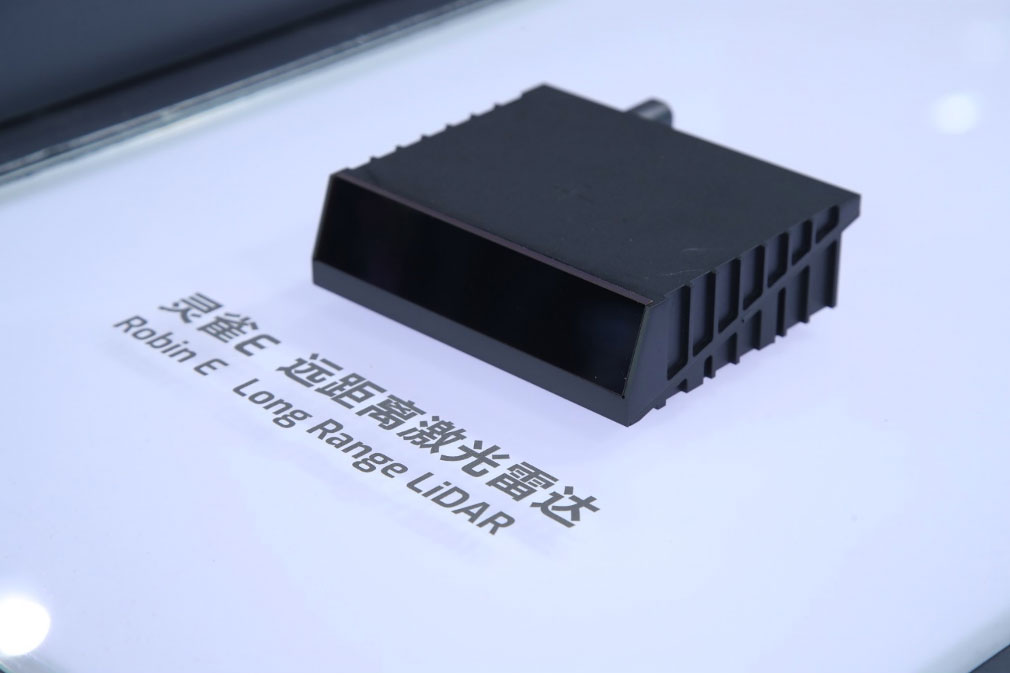
Seyond is also developing the price-sensitive front lidar, Robin E family with 905-nm technology. With a 30-mm ultra slim design, 200-m high detection range, resolution up to 0.1 degree, Robin E is not sacrificing performance for price.
DVN: which is the cost reduction curve for Lidar applications in China ?
Seyond: Front lidar is getting cheaper and cheaper, with a price target of $150 for 2025-26 SOPs. Regarding side lidars, we can expect even cheaper lidars with the future generation of SPAD which will allow 40m range with a 0,5° resolution.
DVN: What is your current business model ?
Seyond: We are selling lidars with point clouds (Nio is doing their own perception software), but we have perception software available for co-development. Some OEMs require to deliver both a point cloud and perception software.
DVN: how big is the team of Seyond ?
Seyond: Currently about 600 employees, with more than 500 in China.
DVN: How many manufacturing lines do you have in China ?
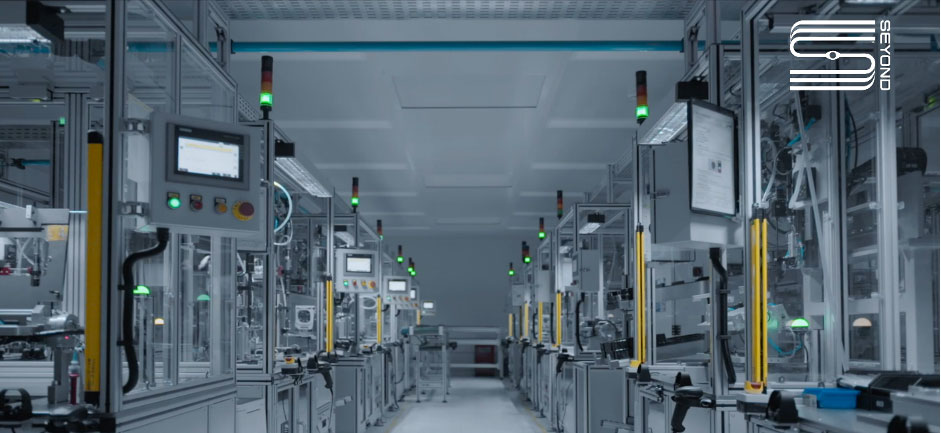
Seyond: We have four production lines in China. One with high capacity for the Falcon and a new one for the Robin. We are also going to have a small production line in our Sunnyvalle, California [facility] start operation from next year.