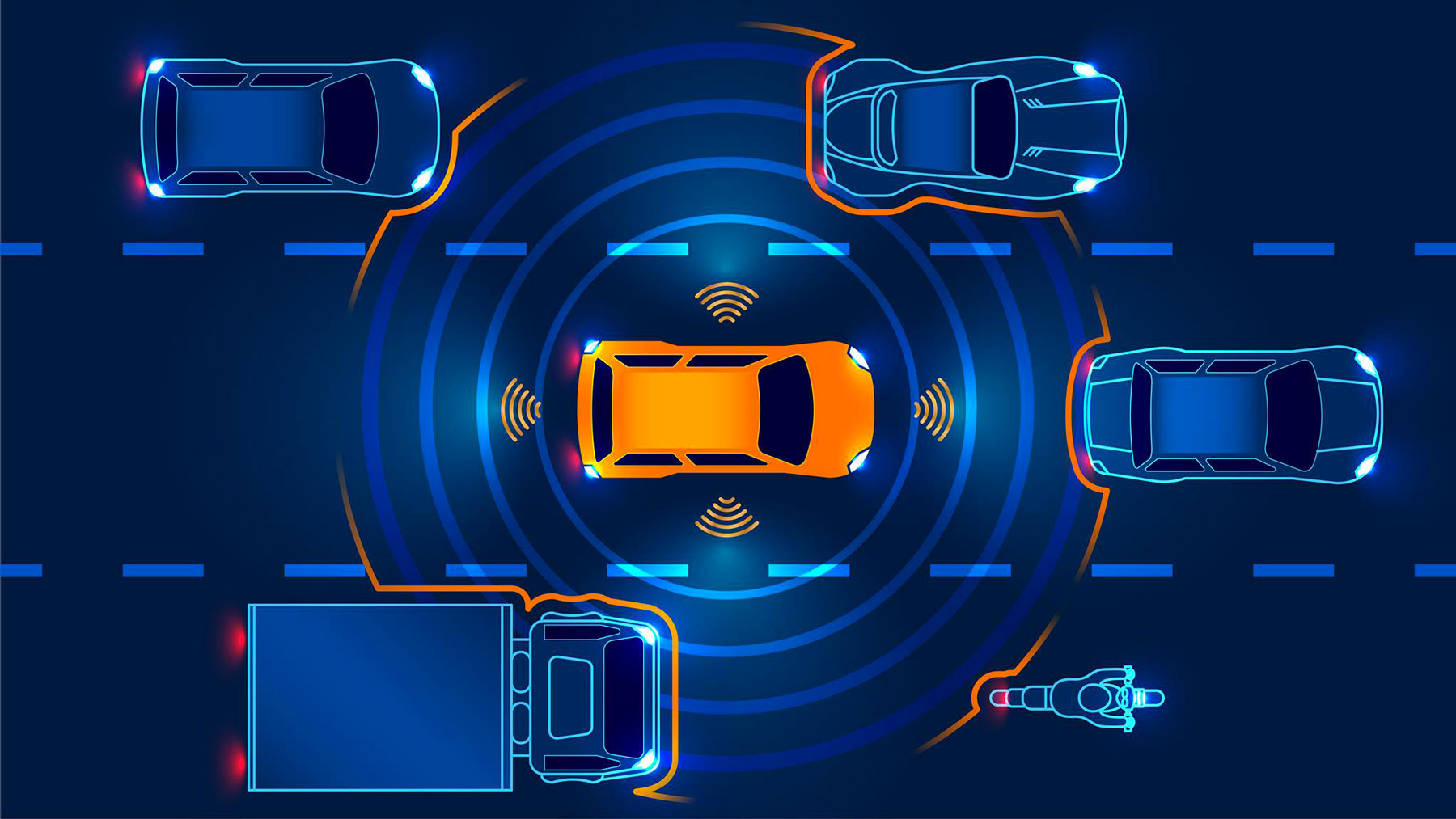
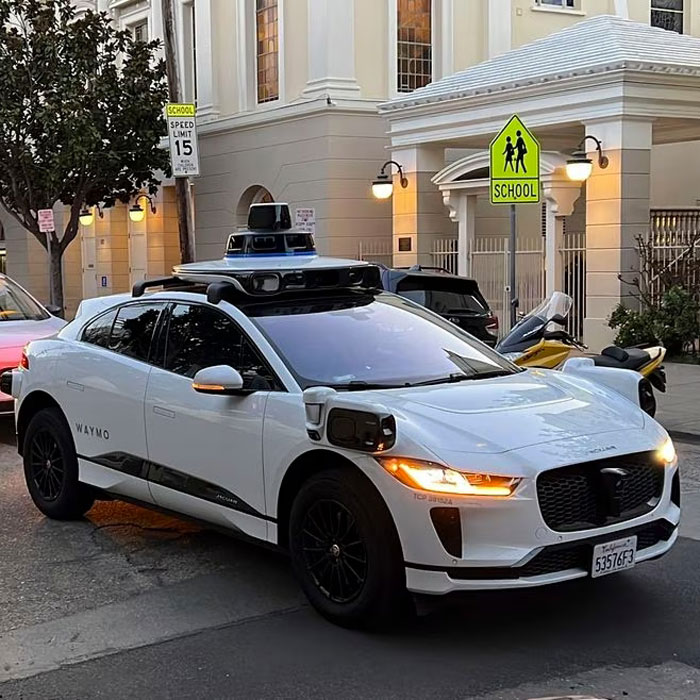
California regulators have loosened robotaxi regulations; Waymo and Cruise robotaxi services now can operate throughout San Francisco at all hours, despite safety worries spurred by recurring problems with unexpected stops and other erratic behavior that resulted in unmanned vehicles blocking traffic, including emergency vehicles. The state’s Public Utilities Commission voted to approve rival services from Cruise and Waymo to operate around-the-clock service.

A fleet of self-driving cars from Cruise became stuck in the middle of three San Francisco streets, causing a massive traffic jam. At least several self-driving cars stopped in the middle of the street with their hazard lights blinking. Cruise responded by claiming that a large nearby festival consumed so much network bandwidth that it interrupted the vehicle connectivity. If true, the incident could expose network conditions as a potentially significant weakness for self-driving cars.
The California state department of motor vehicles has asked Cruise to halve the size of their AV fleet after one of them collided with an emergency vehicle. Cruise has agreed to a 50% reduction and will have no more than 50 driverless vehicles in operation during the day and 150 driverless vehicles in operation at night.
Still in California, San Francisco has started testing an autonomous shuttle service, Beep. The free shuttle will run daily (with a human attendant) in a fixed route called the Loop around Treasure Island in the middle of San Francisco Bay. The shuttles are operated by Beep, Florida-based company that has run similar pilot programs in more than a dozen US communities, including service at the Miami Zoo, Mayo Clinic and Yellowstone National Park.

Volkswagen Commercial Vehicles has begun testing a self-driving version of the ID.Buzz electric vehicle with Mobileye Drive technology on two continents. In Munich, Germany, and Austin, Texas, Volkswagen will validate the Mobileye Drive-equipped ID. Buzz vehicles with safety drivers on public roads, towards a goal of series production.

General Motors China has recently obtained an intelligent connected vehicle (ICV) road testing qualification permit in Shanghai, which allows the company to conduct L4 autonomous road testing within the designated demonstration areas. This road test will be conducted with mass-produced vehicles, which represents a significant milestone in the partnership between GM China and Chinese autonomous driving startup Momenta. The initial phase of this road testing is planned for one year.

IM Motors, a JV joining SAIC, Alibaba, and Zhangjiang High Tech, unveiled their 3- to 5-year roadmap for its intelligent driving products, including initiation of the “IM AD City NOA (Navigate on Autopilot)” public beta test, scheduled for this October. The internal testing of the City NOA feature began in April this year and has progressed smoothly, with public testing scheduled to start in October. Besides, the company said the Commuter Mode of the IM AD is expected to rapidly cover over 100 cities nationwide by 2024. By 2025, the IM AD will transition into the Door-to-Door era, which is characterized by all kinds of commuting scenarios. the upcoming LS6, which will debut at the Chengdu Auto Show, will be equipped with the HD-map-free NOA capability across its lineup. It will also introduce an industry-first “one-click scene valet driving” feature, addressing high-frequency pain points in user city commuting scenarios through the IM AD technology.

Hongqi, the premium brand under FAW Group, announced the success of its third-generation L4 Robotaxi in the autonomous driving road test license examination conducted within the Beijing High-level Automated Driving Demonstration Area (BJHAD). The examination encompassed a comprehensive range of 26 scenarios, including intersection navigation, pedestrian interaction, and vehicle conflict resolution. Impressively, Hongqi’s third generation L4 Robotaxi excelled across all examination domains. The vehicle is installed with 7 solid-state lidar units, 7 cameras, and 5 millimeter-wave radars.


