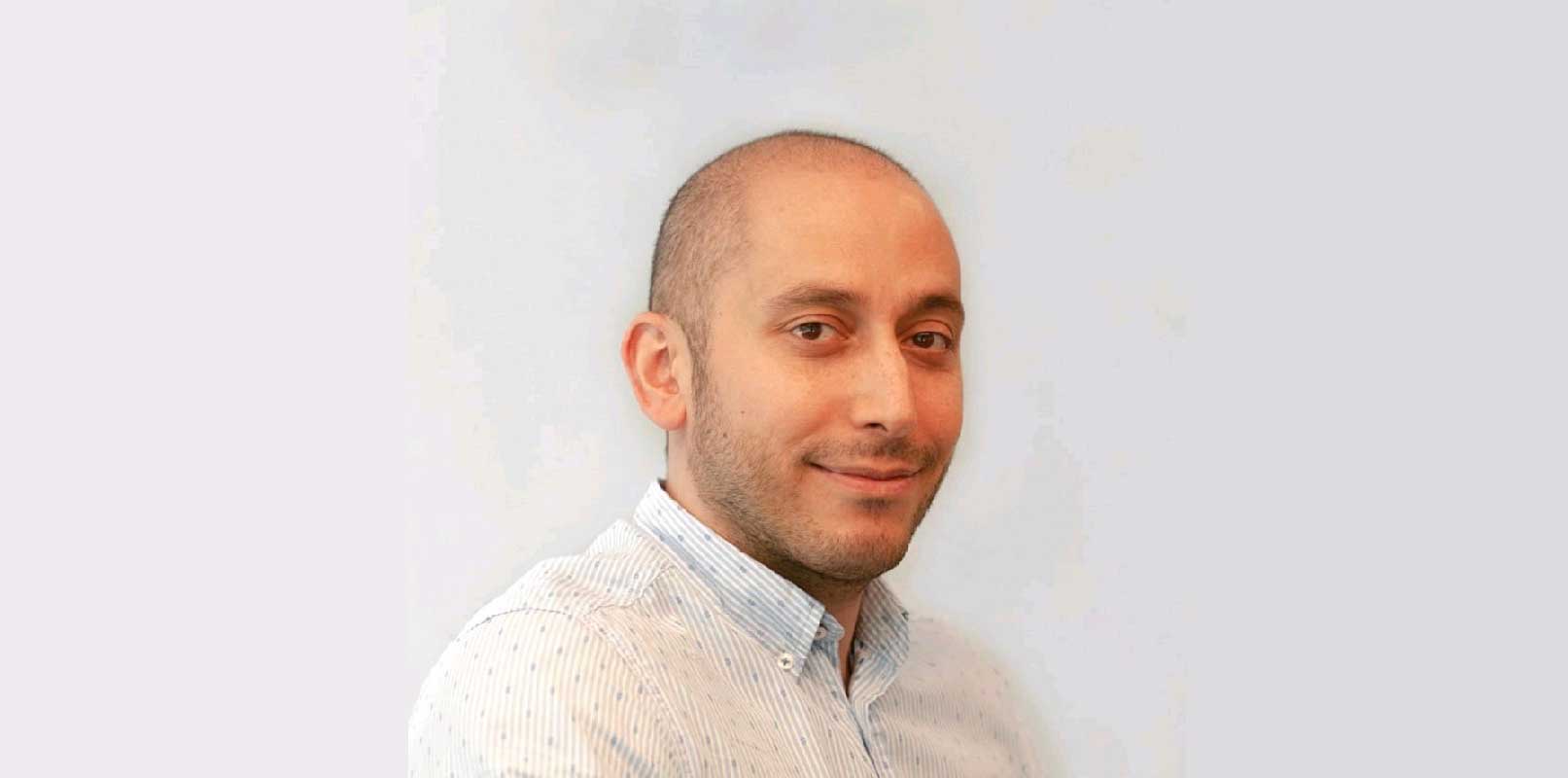
Raed El Makhour joined Wideye by way of AGC in 2021, and is currently the company’s Chief Product & Marketing Officer—a leadership role wherein he is responsible for product strategy and roadmap; he also handles market intelligence activity.
From 2016 to 2021, he was with Renesas Electronics, where he served as ADAS segment leader and platform architect responsible for defining ADAS microcontrollers and systems-on-chip for cameras; radars, and lidars. From 2010 to 2016, he worked in R&D at Renault-Nissan, focusing on antenna integration; he then moved to ADAS project management for the Espace; Scenic; Talisman; Kadjar, and Megane models. From 2006 to 2010, he worked as a research engineer at Valeo Electronics and Connective Systems.
He holds an electronics and communications systems engineering degree, and a PhD in electronics from INSA Rennes (National Institute of Applied Science at Rennes, France), sponsored by Valeo.
DVN: What were AGC’s objectives when Wideye was created in 2016?
Raed El-Makhour: Wideye is part of the Mobility Business Development Office (formerly Incubation Factory), where AGC gives the opportunity to its employees to innovate while giving them an adequate infrastructure to develop a new business. It’s a new way of conceiving and developing innovation. The goal is to address an idea with market demand before starting its development. For Wideye, the idea was to target the autonomous-driving sector, part of AGC strategic focus on CASE (Connected, Autonomous, Shared, Electric) megatrends. Suitability of this ambitious idea, which becomes a global project, is controlled; verified, and sponsored in an iterative process, in a fast and agile manner.
DVN: How do you develop as a startup within a large glass group like AGC?
R.E-M.: Wideye was incubated within AGC in 2016, hence it inherits from all existing AGC processes, but also benefits from flexibility to act as startup, then scale up with our own business plan. Luckily AGC paved the way by providing us the necessary weapons such as financing; resources, and industrial assets. If you add to that a highly motivated and skilled team; an empowerment; a trust relationship, and synergy with top management in Europe and Japan, you could only obtain a success story.
DVN: What can you tell us about Wideye’s offerings?
R.E-M.: Wideye offers sensor integration solutions thanks to unique glass composition. Our portfolio includes three product lines targeting camera and lidar integration based on three strategic pillars: performance; reliability, and seamless integration. Some examples:

- Optical Sensor Cover: one of the first components of our portfolio, consisting of an optical sensor cover that goes directly onto the lidar housing. It’s an automotive-grade cover with high infrared transmission and functional features such as defrosting mechanisms; anti-reflective coating; water repellent coating, and blackening. Needless to mention, resistance to stone chip impact.
- Glass Trim:an optical cover with seamless integration used as a 2D or 3D curved additional protective skin on the car body in different locations such as roof; fender; grille, or B-pillar.
- Vision Glazing:one of AGC’s core products such as windshield; backlight; or sidelights, aiming to have an optimum use of the exterior glass surface for seamless sensor integration.
On top of the above, Wideye developed an end-to-end design service to support tier-1s and automakers in their journey of sensor integration.
DVN: How do you feel about lidar integration behind the windshield?
R.E-M.: We clearly see a move from bumper to a higher position allowing less exposure to impact and dirt, and a high vantage point optimizing detection. Next to the roof integration for which we have an upcoming SOP at a major automaker with our trim solution, we clearly see a parallel path based on windshield integration
Windshield integration has benefits such as high perspective view; optimal sensor protection by the windshield with lower exposure to dirt and damage, and existing cleaning and defrosting solution. In addition, it allows a seamless sensor integration while respecting vehicle styling and allowing better aerodynamics with a lower drag coefficient.
While windshield inclination angle may cause a signal degradation; our windshield is optimized for the highest infrared transmission; the question is: where should the automaker put the threshold of acceptance while considering a compromise between performance and design?
DVN: Is this solution already mature; will behind-windshield lidar integration become standard? How does wavelength selection factor in?
R.E-M.: Our windshield solution inherits AGC expertise in developing automotive glass. Our Wideye windshield, dedicated for lidar and camera applications, offers high optical quality and compatibility with both 905- and 1550-nm wavelengths. It’s today in B-sample phase for a committed business, with a major automaker targeting SOP in mid-2024. In parallel, we have ongoing pre-development programs with automakers exploring this integration and eager to adopt it post development. Will it become a standard? I can say that it will surely play a major role in the integration schemes surviving in the future. One of the main questions is, how to co-integrate multiple cameras; rain sensors; antennas; lidar, and mirror in a small form factor within the vehicle, while preserving the performance. It’s a use case Wideye already showcased and for which we are working closely with our customers to achieve at mass production level.

DVN: What about cost? Can it be driven down by windshield standardization, or how much hardware diversity is required?
R.E-M.: It will depend on the sensor configuration for each car. If there are only cameras, you’ll need a standard windshield; if there is a lidar with the cameras you would need Wideye glass. Both windshields can be produced on the same line at AGC, lowering efforts and cost.
DVN: Wideye recently announced a partnership with Innovusion for windshield integration; what other partnerships do you have (or are you working toward)?
R.E-M.: Wideye’s solution is sensor-agnostic and designed to be compatible with all lidar technologies; it covers all integration schemes. We are proud to have established a name within the sensor ecosystem, where we are well connected to major lidar suppliers and automakers globally. Clearly, sensor integration is not plug-and-play anymore, and collaboration with sensor suppliers is key; it even requires a three-party setup with the end customer which is the case for the programs we are nominated on. Since 2016, we’ve showcased integrations with multiple players like Velodyne; Ouster; Cepton; Xenomatix, and Sony. We have a good partnership with Innovusion—who already proved their solution on the market—and we are also collaborating with Opsys and Luminar (as seen at CES this year). Other pre-developments are in the pipeline, but they’re not public yet.
DVN: Yes, at CES Wideye promoted unique 360° integration solutions. Could you tell us more about your concept? Do you have specific solutions for lidar integration in the B-pillar or fender? Is there a cleaning issue similar to the front lidar?
R.E-M.: We showcased a 360° solution with lidar integration in roof; fender; B-pillar; windshield, and bumper, where both B-pillars and windshield lidars were active. Part of our mission is to enable seamless sensor integration all around the vehicle, hence our focus on side integration where we are starting to see some customer requests. Requirement are not as stringent as for front-facing lidar—lower range requirement, less stone impact—but still, our glass makes the difference against plastic, and heating; defrosting, and cleaning are also necessary.


DVN: What do you predict in terms of automotive lidar deployment in the coming years?
R.E-M.: We clearly see that RFQ volumes are boosted compared to three years ago, and lidar deployment is becoming mainstream with a clear move of integration from bumper to roof as first step and windshield as a second.
DVN: What are Wideye’s ambitions?
R.E-M.: Wideye’s solution is targeting automotive applications such as ADAS and autonomous driving. We also have a dedicated solution for industrial markets, under the Wideye Rhino brand. This solution is based on Wideye glass and tuned for industries such as trucks; freight transport; farming, and mining.
With our efficient development process; extensive patent portfolio, and strong business relationships, we are well equipped to play a big role in the ADAS market. In fact, we are already there. Our ambition is to build on our success; deliver our committed SOP programs, and increase our market share. In addition, we plan to expand our business globally—profiting from AGC’s footprint in Asia and the US, and we aim to adopt a closer approach to customers by offering turnkey solutions aiming to accelerate time to market.


